
Football is beautiful.
Because football can take a man carrying private grief and, for a few seconds, give him somewhere to put it.
Take Liverpool star Cody Gakpo. He and his partner had suffered a personal loss during the World Cup and, days later, he scored against Morocco.
He did not celebrate so much as collapse, falling to the ground in tears as his teammates gathered around him.
A goal had changed nothing. And yet, for one impossible moment, it meant everything.
Football can take Ferran Torres, too, a player who once spoke openly about losing his confidence, feeling trapped at his lowest point and turning to a psychologist for help, and place the ball at his feet in the 106th minute of the biggest match the sport can offer.
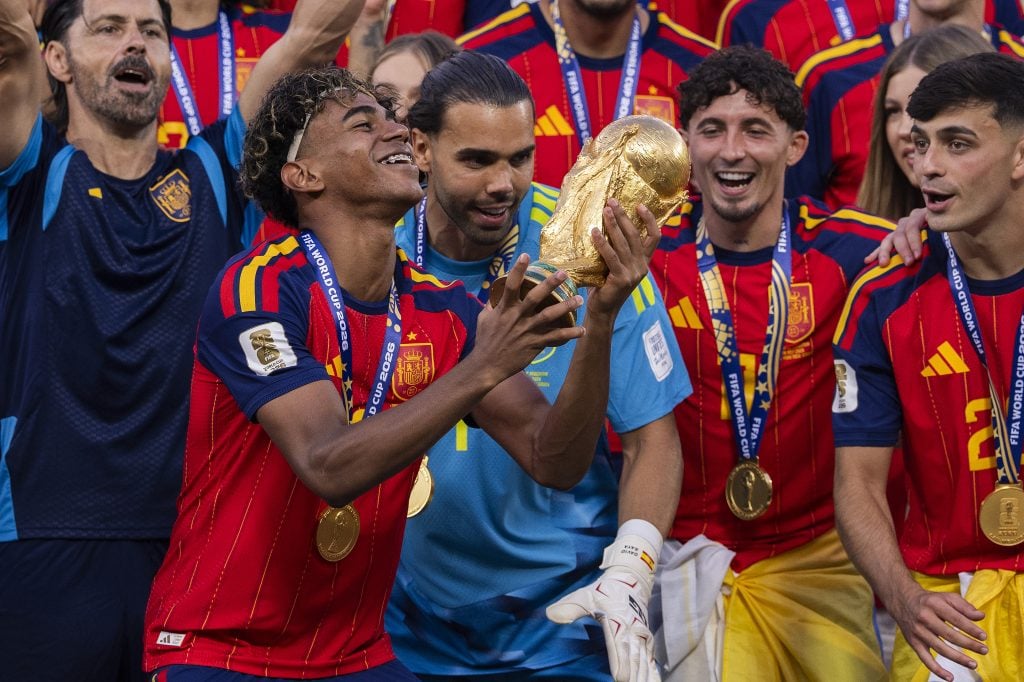
Years of criticism, doubt and reconstruction condensed into one swing of his weaker foot. Spain 1, Argentina 0. World champions.
Ferran Torres, of all people, the man who decided the World Cup final.
Football is beautiful like that.
Football is cruel like that, too.
Because the same game that can manufacture redemption in a second can make the greatest players who ever lived spend decades asking whether their moment will ever arrive.
It is not even as though the clock is consistent because, occasionally, it also produces someone like Lamine Yamal.
Someone for whom the waiting barely exists.
Football does not reward people in order
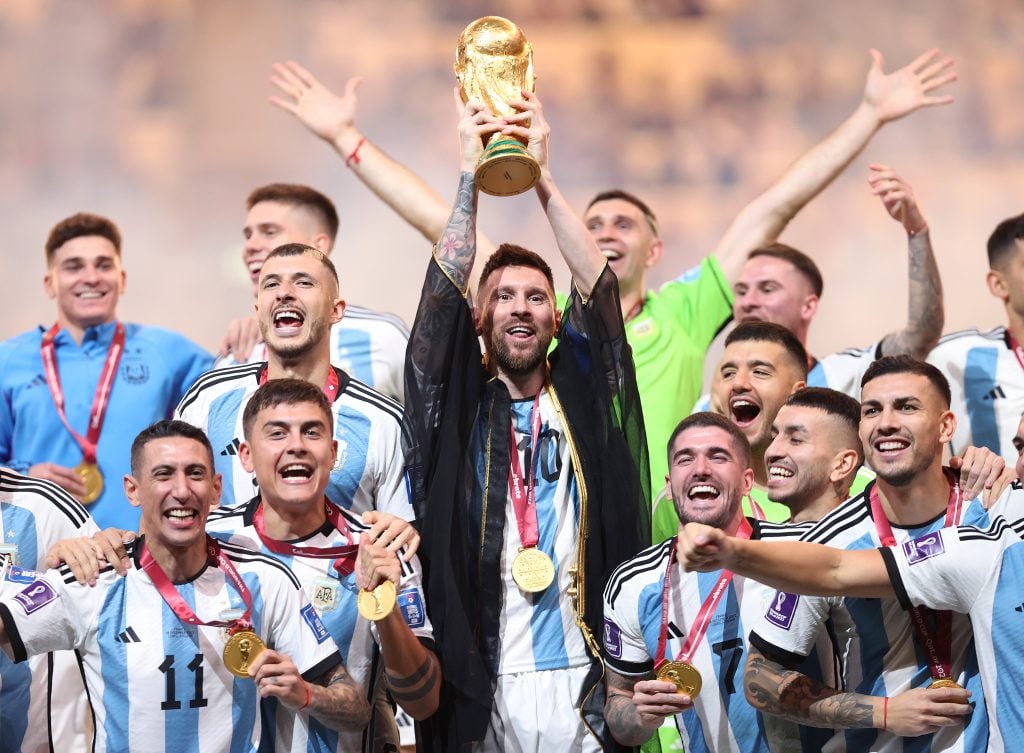
Lionel Messi had almost everything before he had the thing he wanted most.
League titles. Champions Leagues. Ballon d’Ors. Goals that did not make sense and performances that turned football grounds into theatres.
Yet the World Cup remained elusive, hovering over every conversation about his career as though everything he had already accomplished required one final stamp of approval.
He finally lifted it in Qatar at 35. His fifth World Cup. The accolade arrived when there was no guarantee of another opportunity after it.
Cristiano Ronaldo, the other great of this generation, has been waiting for even longer.
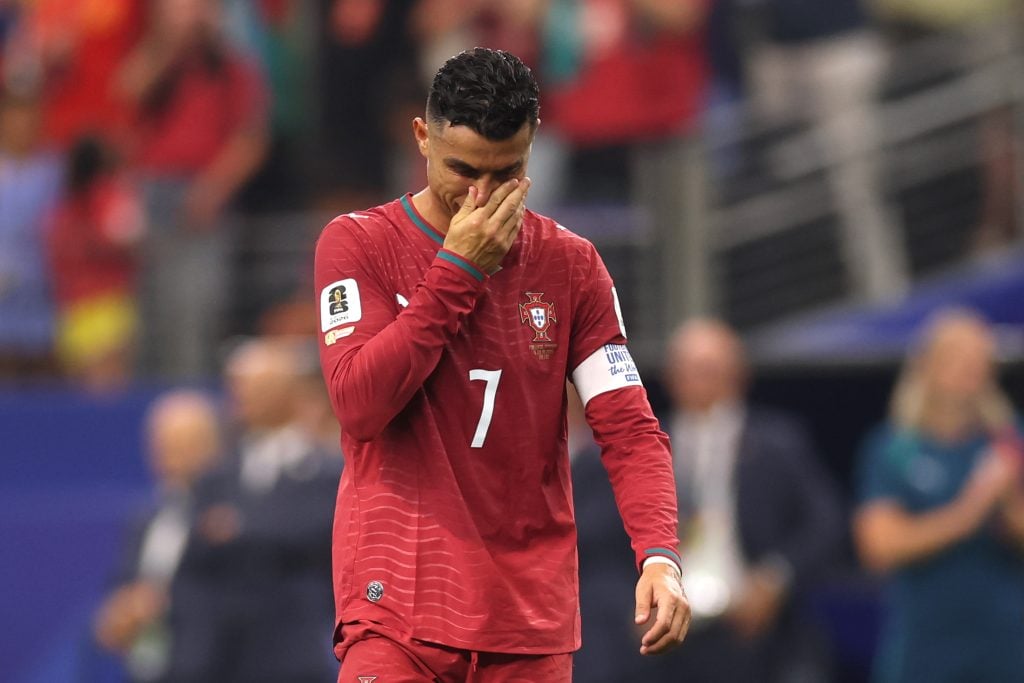
At 41, he travelled to a record sixth World Cup this summer knowing it could be his last. Portugal survived long enough for hope to become dangerous again.
Then came Spain in the Round of 16, Mikel Merino in stoppage time and a 1-0 defeat. Ronaldo confirmed afterwards that his World Cup journey was all but over.
He had chased that particular trophy across two decades. It never came.
That is the uncomfortable truth. There is no queue, no waiting room and no guarantee that perseverance and persistence lead to a fairytale ending.
Football gives. Football takes. However, it often does not do so fairly.
And then, there is Lamine Yamal
Lamine Yamal does not appear to exist on football’s normal calendar.
At 15, he made his first-team debut. At 16, he was a regular starter at one of the biggest clubs in the world. In the final days of his 16th year, he was already breaking records at a European Championship.
He turned 17 and, a day later, lifted the Euros with Spain while also winning the award for the tournament’s Best Young Player.
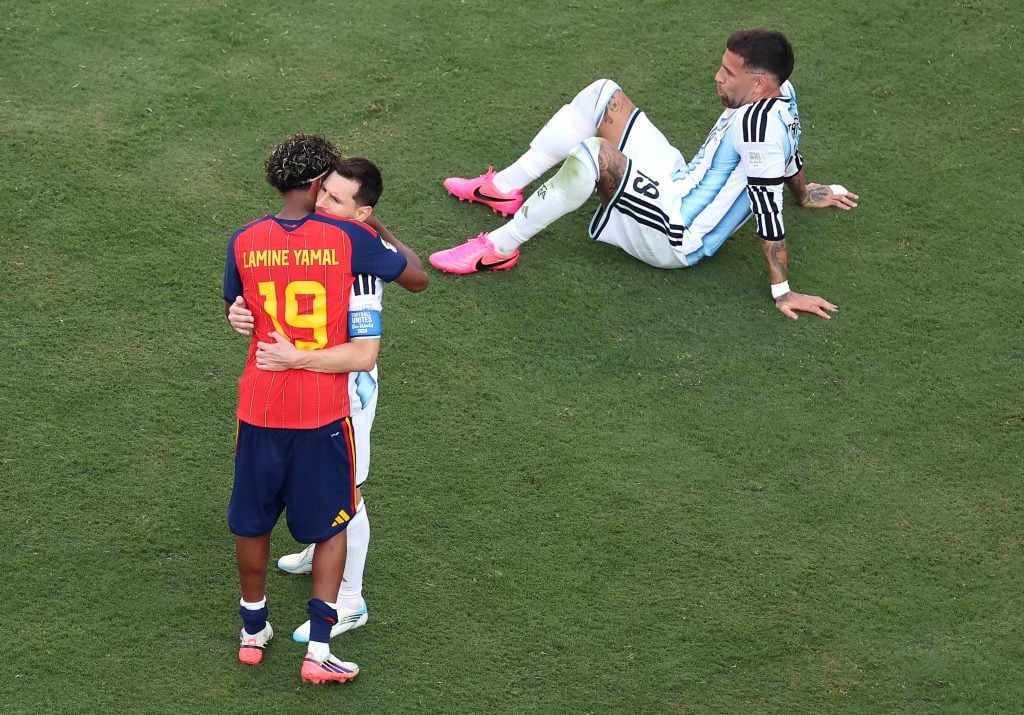
Two years later, he turned 19. Six days after that birthday, Spain beat Argentina in New Jersey to become world champions.
Euros at 17. World Cup at 19.
There are careers that spend 20 years trying to reach one of those photographs. Lamine has completed the set before turning 20.
Spain’s World Cup final was not even constructed as some grand individual coronation. The final, or, for that matter, the entire tournament, was not about him.
It was Ferran who emerged from the bench to score the only goal. It was his teammate Pau Cubarsi who walked away with the Young Player of the Tournament award this time.
Spain’s collective strength completed the job when their teenage superstar could not.

Lamine did not need a Messi-in-Qatar tournament to become a world champion. He did not have to drag his country across the finish line because time was running out.
Time, for him, at this point, appears limitless.
What do you chase when the missing piece is already there?
For most footballers, greatness is spoken about relative to absence.
The Champions League they have never won. The international trophy that escapes them. The final they still replay in their heads. The one empty space in the cabinet that becomes larger precisely because everything around it is full.
Lamine, at international level, has already removed the two biggest absences.
That does not mean there is literally nothing left to win. There will be more European Championships, more World Cups, Nations Leagues, records and individual prizes.
However, emotionally, the equation is very different.
There is no longer one great international trophy required to complete his story. Anything from here on becomes accumulation, then repetition and, finally, dynasty building.
Winning something once gives a career its defining image. Winning it repeatedly asks a different question: how much history can one person occupy?
Pele did not become Pele because he won the World Cup very young. He became something beyond ordinary measurement because history kept happening around him.
Lamine, much like Pele, will not be chasing completion in his career. He is chasing scale.
The danger of arriving too early
There is, of course, another side to this gift. When football gives you everything early, it also changes what the world considers normal.
A teenager winning the Euros should be absurd. A 19-year-old becoming world champion should feel impossible.
For everyone else, those trophies can become destinations. For him, they are already memories.
However, there is the flip side to it. With Lamine, milestones arrive so quickly that the extraordinary risks becoming routine.
Lamine could never win another World Cup and still possess something Ronaldo spent his entire career pursuing.
That would not make him a better player, though. What comes next will define Lamine as much as these two trophies do.
What comes next is not bonus territory. Not meaningless. Not pressure-free. Certainly not ambitionless.
It does come with a degree of freedom to make mistakes, though.
Football has no clock
Perhaps that is the real beauty of football.
Not all dreams come true. Not all greats get their moment.
The beauty is that nobody knows when the story is arriving.
Sometimes it arrives at 35, after an entire nation has spent years wondering whether the greatest player it ever produced will ever touch the trophy he wants most.
Sometimes you chase it until 41 and football never opens the door.
Sometimes the ball falls to a player who once wondered how he would escape his own darkness, and he scores the goal that makes his country world champions.
Sometimes a man scores while carrying a grief no stadium can understand.
And sometimes a boy finishes football’s greatest international journey before his teenage years are even over.
The post Football’s broken clock: What Messi and Ronaldo waited decades for, Lamine Yamal already has appeared first on Barca Universal.
from Barca Universal https://ift.tt/CW6bPIm


